Holden's Secret Weapon: The Commodore That Almost Conquered US
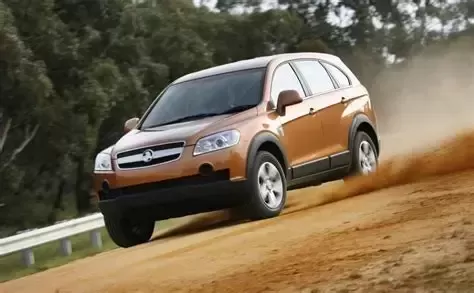
Within General Motors' vast automotive lineage, a select few vehicles stand out not just for their rarity, but for the audacious vision behind them. One such legend is L318235, a truly unique machine born on March 17, 1998, at Holden's Elizabeth plant in South Australia. This extraordinary creation was a left-hand-drive (LHD) Australian-built Holden Commodore SS, powered by the potent supercharged 3.8-liter Buick V6, an engine familiar to Americans from cars like the eighth-generation Riviera. Adding to its exclusivity, L318235 debuted with a metallic orange paint and a bespoke interior trim not yet available to the public. It was a one-of-a-kind engineering feat, commissioned by a discerning editor.
The mid-1990s saw Holden, GM's Australian arm, develop a comprehensive left-hand-drive (LHD) component architecture for its VT-series Commodore sedan. Initially intended for a proposed Buick-badged venture into the American market – a plan ultimately shelved – these LHD capabilities weren't entirely abandoned. Instead, they were repurposed for Chevrolet-badged exports to Saudi Arabia. It was against this backdrop that the editor-in-chief of Australia's Wheels magazine conceived a bold idea: to introduce a LHD Commodore SS, a potent rear-wheel-drive (RWD) sports sedan, to the heart of America.
The goal was to demonstrate to a US audience, accustomed to a parade of front-wheel-drive (FWD) "performance" cars throughout the 80s and 90s, the genuine dynamic prowess of a balanced RWD platform. The LHD configuration was crucial for American perception, ensuring writers and enthusiasts would take the Commodore seriously. Moreover, the project offered a subtle opportunity for Holden to demonstrate its engineering capabilities to GM's headquarters in Detroit, following the cancellation of the Buick program.
Bringing this ambitious concept to fruition required overcoming significant engineering hurdles. A pivotal meeting with Holden's chief engineer, Tony Hyde, laid bare the complexities. While the standard Commodore SS boasted Holden's 5.0-liter V8, its bulky configuration rendered it incompatible with the LHD engine bay due to the relocated brake master cylinder. The naturally aspirated 3.8-liter L36 V6, though fitting, lacked the desired punch for a performance showcase.
The solution emerged in the form of the supercharged L67 SII 3.8-liter V6, an engine more commonly found under the hood of Holden's long-wheelbase Statesman, and transversely mounted in its Buick brethren. Despite existing for RHD applications, integrating it into an LHD Commodore SS was uncharted territory. Hyde's response, a quiet acknowledgement followed by a determined "We ought to see if we can do it," set the stage for an extraordinary build.
A One-of-a-Kind Creation
The fabrication of L318235 was a testament to rapid innovation. Utilizing one of the final Phase II prototype LHD VT-series Commodore bodies and the inaugural batch of pre-production LHD parts, combined with the full Commodore SS package – including its suspension, wheels, tires, body kit, and distinctive badging – the project swiftly took shape. Integrating the supercharged V6 necessitated the custom fabrication of 20 unique components by Holden engineers, ranging from a bespoke throttle body and a re-engineered exhaust manifold to an entirely new wiring loom. Beyond the mechanical marvels, the car received exclusive aesthetic touches: a vibrant metallic orange paint shade named "Tiger," a color slated for a future Commodore facelift, and a luxurious leather interior with panels meticulously color-matched to the striking exterior. From the initial lunch meeting to its readiness for the road, this bespoke creation materialized in an astonishing eight weeks.
Across America: A RWD Revelation
With this singular vehicle complete, Wheels editor Bob Hall (a figure recognized for his role in the Mazda Miata's inception) and photographer Warwick Kent embarked on an epic eight-day transcontinental journey. Piloting L318235 from Los Angeles to New York, with a crucial stop in Detroit, they traversed some of America's most iconic landscapes, capturing both breathtaking scenery and compelling automotive narratives for a substantial 14-page cover feature.
The story wasn't just a travelogue; it included revealing mini-comparison tests. The Commodore SS was pitted against what America then considered its premier performance sedans: the FWD Pontiac Grand Prix GTP and Ford Taurus SHO. The results were decisive. American automotive journalists, as hoped, unequivocally favored the Holden. Praise poured in, highlighting the car's superior dynamics. Tom Bryant, then editor-in-chief of Road & Track, lauded the "pleasure" of driving a RWD GM sports sedan, appreciating the ability to "go into a corner, boot the throttle, and not have to fight the steering wheel feedback." Chris Jensen of the Cleveland Plain Dealer echoed this sentiment, commending the steering as a "triple treat of weighting, accuracy, and a level of communication that has eluded GM on any of its other American products, including the Corvette."
Legacy: Paving the Way for RWD Returns
Years later, the sight of a Pontiac G8 GT – essentially a rebadged, LHD, later-generation Holden Commodore SS – arriving at the MotorTrend garage brought a rush of memories. This V8-powered, RWD performance sedan, boasting the steering, braking, and suspension characteristics expected of a true sports car, stood as a poignant reminder of L318235. In 1998, the aspiration was for that unique Commodore SS to ignite interest within GM for a vehicle concept that seemed a natural fit for the nation that gave birth to the muscle car. The eventual arrival of vehicles like the G8 GT suggested that, perhaps, that one-of-a-kind Australian machine had indeed played a quiet, yet significant, role in shaping GM's future approach to performance sedans in America.