Nissan Leaf Redesigned for 2026: Style, Range, but Value Questions
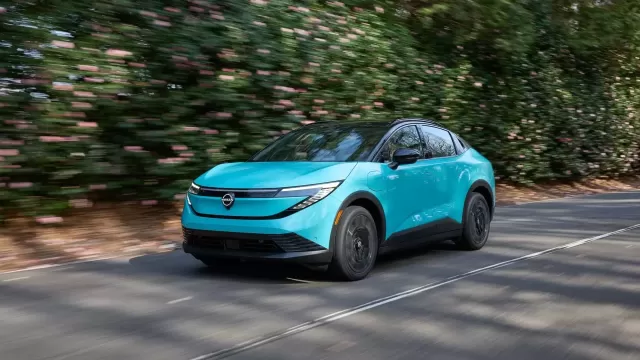
Nissan's redesigned Leaf finally arrives for 2026, marking a significant departure from its predecessors. After squandering its initial lead as America's first mass-market EV, Nissan has completely reimagined the Leaf, aiming to reclaim its position in the affordable electric vehicle segment. This all-new model boasts a fresh platform, a liquid-cooled battery, updated powertrain, and entirely new exterior and interior designs.
A Bold New Look and Design
Gone are the days of the Leaf looking like a science experiment or an anonymous hatchback. The 2026 Leaf sports a sharp, modern aesthetic that Nissan describes as an SUV coupe, a popular styling trend. Eye-catching design elements are present throughout, even incorporating subtle "Ni-San" (two-three in Japanese) references in the charging port doors and taillights. It's a vehicle designed to be seen, moving beyond its purely functional roots.
Enhanced Range and Charging Capabilities
Despite an increase in size and weight, the new Leaf achieves its longest driving range yet. The top-tier Platinum+ model offers an EPA-rated 259 miles, a substantial improvement over the previous generation. In real-world testing, it achieved 243 miles at a constant 70 mph, a significant leap from the 169 miles managed by a previous generation model.
A major upgrade is the adoption of the Tesla-developed NACS port for fast charging, replacing the outdated CHAdeMO standard. A separate J1772 port is included for Level 1 and Level 2 charging. While the NACS port can handle all charging levels, engineering constraints prevented Nissan from fully integrating this functionality at launch. Fast charging speeds have also seen a dramatic improvement, with the new Leaf capable of pulling up to 150 kW, significantly faster than its predecessor. Charging from 5% to 80% now takes 36 minutes, with substantial range added within the first 15 and 30 minutes.
Performance and Handling Updates
While the new Leaf is nearly 500 pounds heavier, its peak horsepower remains the same, with only a slight torque increase. Surprisingly, instrumented performance metrics show minimal degradation, with acceleration to 60 mph only one-tenth of a second slower at a respectable 6.8 seconds. Braking performance has slightly worsened, requiring 129 feet to stop from 60 mph, likely due to increased weight or component changes.
Nissan's decision to replace its intuitive one-pedal driving system with a multi-level e-Pedal system has drawn criticism. The new system doesn't bring the car to a complete stop without brake pedal intervention and exhibits an undesirable automatic brake pedal movement. On the positive side, handling has seen improvements, with higher lateral g-force figures on the skidpad and a faster lap time on the figure-eight. However, subjective testing suggests that the promised engaging cornering experience wasn't fully realized, and handling performance deteriorates on bumpy surfaces.
Ownership Experience and Value Proposition
The everyday usability of the new Leaf faces some challenges. The interior is notably compact, with taller editors finding the front row tight and the rear seat cramped. While a fancy electrochromic sunroof is available, it's restricted to higher trim levels.
This highlights a broader issue: many desirable features are locked behind higher trim packages. Full Google integration, including an en-route charging planner, is exclusive to more expensive trims and comes with a subscription fee after the first year. Furthermore, buyers in colder climates will need to pay extra for a battery heater to mitigate winter range loss.
Is the New Leaf Worth It?
Currently, the base model Leaf is positioned as the most affordable EV in America. If budget is the primary concern and advanced features are not essential, it presents a solid value. However, it faces stiff competition. The Chevrolet Equinox EV offers comparable or better range, slightly slower charging, similar performance, more interior space, and superior standard technology like Super Cruise, all at a similar price point. The returning Chevrolet Bolt, while offering less range and potentially slower acceleration, is cheaper, charges faster, provides more space, and also avoids gating its technology. The Bolt even offers Super Cruise and video streaming capabilities while parked, ideal for charging sessions.
The 2026 Nissan Leaf is undeniably a significant improvement over its predecessors, offering a stylish design and a much-improved EV experience. However, when evaluated against its rivals, it falls slightly short of being the ultimate inexpensive EV choice, particularly due to its feature-gating and less competitive interior space.